Has anyone heard the term “stimming”? This is part of the autism vocabulary.
Actually, everyone stims. How many of you twirl your hair, bite your nails, crack your knuckles, bounce your legs when seated? All of these actions are stimming. It is a way for us to release something (could be boredom, anxiety, anger, energy, etc). How many of you come home after a long day of work, hours of shopping, or exhausting family time and just need to “unwind”? Do you read a book, play video games, watch tv, sit and stare? Well, these are all forms of stimming.
You may be asking yourself… wait, what does this have to do with autism? We all do this, it is “normal”…
Well, imagine this… what if you started twirling your hair and did that for hours. What if you didn’t even respond to anyone and just kept twirling? What if you bit your nails for an hour? You’d be left with bloody fingers. THIS is autism. What started as a release turned into a trap. They get stuck in the stim and if left in it, will simply spiral further into their world.
There are many beliefs on how to handle this. Some think you need to stop them immediately so they don’t drift away. Others think they should be allowed because it is how they cope with their reality. Still others believe it is okay so long as it is a “normal” stim.
What I mean by a “normal” stim is so long as the stim is one we would all use, it is okay. Many of these kids do stims that look “odd”. They may flap their arms, run in circles, bang their heads on the walls, mutilate their bodies. They may play with a toy “incorrectly”. Because they don’t look “normal”, some people believe in teaching them a more appropriate stim. Or some kids may hide a ball in their pocket and squeeze it unawares to those around them.
I don’t really know where I land on all of this. Sometimes I let Z stim away if it is something appropriate like watching a movie (stops and starts and all) or an educational app. Some of his stims are collecting random objects and bringing them to a pile and sifting that pile through his hands. I will usually redirect him on this type (redirect = another term we use for that transition to a different activity that many do not handle well).
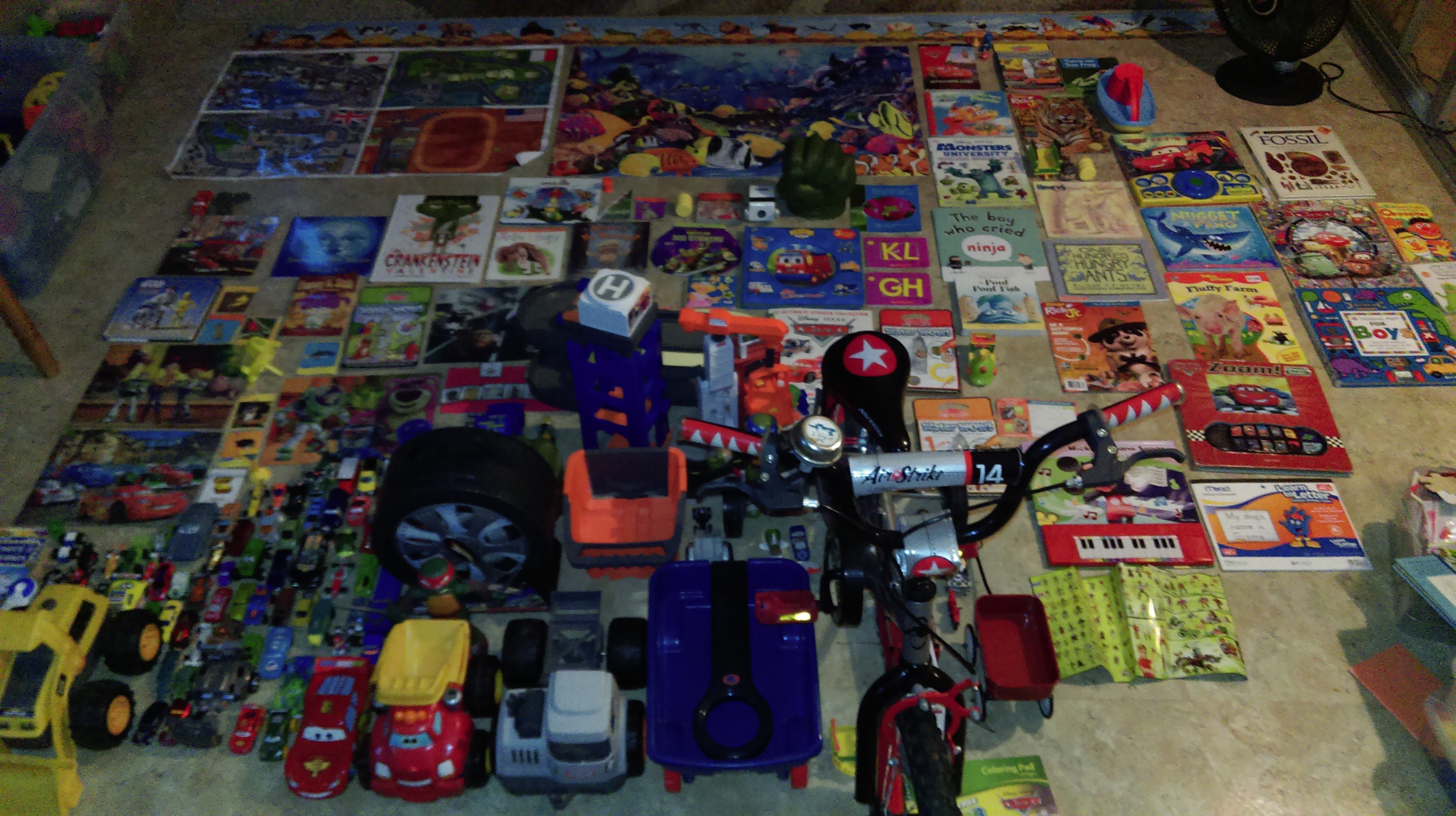
A good way of judging when to allow and when to redirect is whether the stim is getting in the way of interaction. Is Z so lost in what he is doing that he doesn’t notice what is around him? Then it is time to redirect.
Service dogs for autism are actually trained on what stims the kid uses. When the dog notices this happening, the dog will give a nudge to the kid to break the attention. It is a constant redirect.
I believe, just like all of us, they need this release. I think it needs to be in moderation, but I also believe it can be anything that works for the kid. Why are we constantly trying to mold individuals with autism into what is considered “normal”? If my son needs to jump, I would rather say “how high do you need to go”?
Copyright 2019. All rights reserved.
 Tilted Axis